
How to Determine Whether Your Property is Contaminated
Assessing Your Property for Contamination
Industrial and municipal sites face increasing scrutiny over environmental conditions and regulatory compliance. At EnviroBEE, we work with industrial operators, state and local governments, and emergency response teams to evaluate environmental risk, manage hazardous materials, and deliver turnkey solutions when contamination is identified. Determining whether a property is affected by soil contamination or other environmental hazards requires a systematic approach that draws on data, field investigations, and regulatory knowledge.
Contamination can develop gradually through routine operations or occur suddenly due to spills, leaks, or improper disposal practices. In either case, early identification reduces liability, protects public health, and limits operational disruption. The key is understanding the warning signs and knowing when to initiate a formal assessment of contaminated properties.
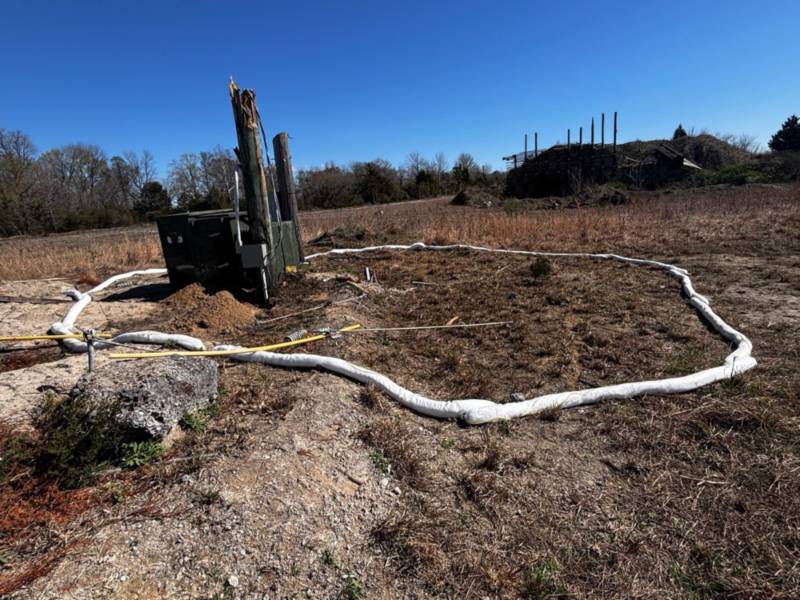
Understanding Soil Contamination & Contaminated Land
Soil contamination occurs when hazardous substances are present in soil at concentrations that pose risks to human health, groundwater, infrastructure, or the environment. Industrial solvents, petroleum hydrocarbons, heavy metals, polychlorinated biphenyls (PCBs), and other hazardous materials are common contributors. Contaminated land may result from decades of manufacturing activity, historical fill practices, waste storage, or accidental releases.
Heavy metals such as lead, arsenic, cadmium, and mercury are particularly concerning because they do not degrade over time. They can migrate through soil layers, impact groundwater, and create long-term regulatory challenges. Industrial facilities and municipal properties are especially vulnerable in locations where past operations predate modern environmental regulations.
Because contamination is not always visible, property owners and managers must rely on environmental data rather than assumptions. A property that appears stable on the surface may still require testing to confirm compliance and protect future development plans.
Common Warning Signs of Soil Contamination
Certain warning signs suggest that further investigation is warranted. While laboratory testing is the only way to confirm soil contamination, field observations and operational history often provide important clues. When these signs are present, the next step should be a structured environmental evaluation:
- Discolored soil, unusual staining, or areas where vegetation struggles to grow
- Persistent chemical odors, especially near storage tanks or former disposal areas
- Evidence of past spills, leaking drums, or deteriorating containment systems
- Historical industrial uses such as metal plating, fuel storage, or chemical manufacturing
Operational records are equally important. Facilities with a history of hazardous waste generation, underground storage tanks, or emergency spill response events should treat those factors as triggers for further review. Even properties that changed ownership decades ago may carry environmental liabilities.
Assessment of Contaminated Properties
A professional assessment of contaminated properties typically begins with a site assessment. This assessment reviews historical records, photographs, regulatory databases, and prior site uses to identify recognized environmental conditions. For industrial and government clients, this step is essential for due diligence during acquisitions, redevelopments, or expansions.
If potential issues are identified, an investigation follows. This step involves soil sampling, groundwater monitoring, and laboratory analysis to determine whether contaminants exceed regulatory thresholds. Sampling strategies are designed around site-specific factors such as operational history, suspected contaminants, and hydrogeologic conditions. The assessment process generally includes the following components:
- Review of historical site activities and regulatory records
- On-site inspection of current conditions and potential release points
- Collection and laboratory analysis of soil and groundwater samples
The information collected during this process forms the foundation for decision-making. It determines whether the property qualifies as contaminated land under state or federal standards and whether remediation is required. For municipalities and state agencies, assessments support infrastructure planning, redevelopment, and compliance reporting. For industrial operators, assessments protect operational continuity and help manage environmental risk.
Regulatory Considerations & Risk Management
A combination of federal, state, and local regulations governs environmental compliance. Depending on the contaminant and the site’s use, cleanup standards may vary. Industrial properties, transportation corridors, and public works facilities often face different regulatory standards than commercial or residential sites.
Failure to identify soil contamination early can result in enforcement actions, project delays, and increased remediation costs. In contrast, proactive investigation allows responsible parties to control the timeline and scope of corrective measures.
Risk management also involves evaluating potential exposure pathways. Contaminants may move through the soil into groundwater, generate vapor intrusion concerns, or spread through surface runoff. A comprehensive site evaluation considers these pathways to determine the full extent of the impact.
Contaminated Property Cleanup & Turnkey Solutions
When contamination is confirmed, a structured contaminated property cleanup plan must be developed and implemented. Remediation strategies depend on the type and concentration of contaminants, site conditions, and regulatory requirements.
Cleanup approaches may include excavation and removal of impacted soil, on-site treatment, stabilization of heavy metals, groundwater remediation systems, or containment solutions. Effective remediation programs often include the following steps:
- Development of a site-specific remedial action plan
- Soil excavation, treatment, and/or waste removal
- Verification sampling and regulatory documentation
As a turnkey provider, EnviroBEE integrates assessment, hazardous and non-hazardous waste removal, transportation, disposal, and site restoration under a single coordinated framework. This reduces delays between investigation and remediation while maintaining regulatory compliance. Our experience in industrial and hazardous waste removal allows us to respond quickly to both planned projects and emergency spill response situations.
The Importance of Ongoing Monitoring
Even after contaminated property cleanup is completed, certain sites require ongoing monitoring. Groundwater wells or vapor mitigation systems may be necessary for long-term protection. Periodic sampling verifies that contaminant levels remain below regulatory thresholds and that remediation systems continue to function as intended. Monitoring also supports future redevelopment. Properties that were once considered contaminated land can often be returned to productive industrial or municipal use once cleanup goals are met.
When to Contact Environmental Professionals
Industrial operators and government entities should not wait for regulatory action before beginning to evaluate potential soil contamination. Proactively working with experienced environmental professionals allows for controlled, well-documented assessments and remediation planning.
Situations that warrant immediate consultation include recent spills, the discovery of buried waste during excavation, redevelopment of former industrial sites, and regulatory notices regarding hazardous materials. Early involvement helps define the scope of work, establish sampling protocols, and coordinate with oversight agencies. It also reduces uncertainty for stakeholders, insurers, and project managers.
Contact EnviroBEE for an Assessment Today
If you suspect soil contamination or require an assessment of contaminated properties, EnviroBEE provides comprehensive evaluation, industrial and hazardous waste removal, and contaminated property cleanup services tailored to industrial and government clients. Contact us today to discuss your site conditions and let us help you coordinate a response plan.