
Industrial Oil Tank Inspection Requirements
Key Requirements for Inspecting Industrial Oil Tanks
Do you operate an industrial facility with onsite oil storage containers? A robust inspection and documentation program protects your people, your property, and the environment. It also keeps your facility aligned with federal Spill Prevention, Control, and Countermeasure (SPCC) rules. Follow this practical guide on what to inspect, how often to test, and other oil tank maintenance tips to promote safety and compliance.
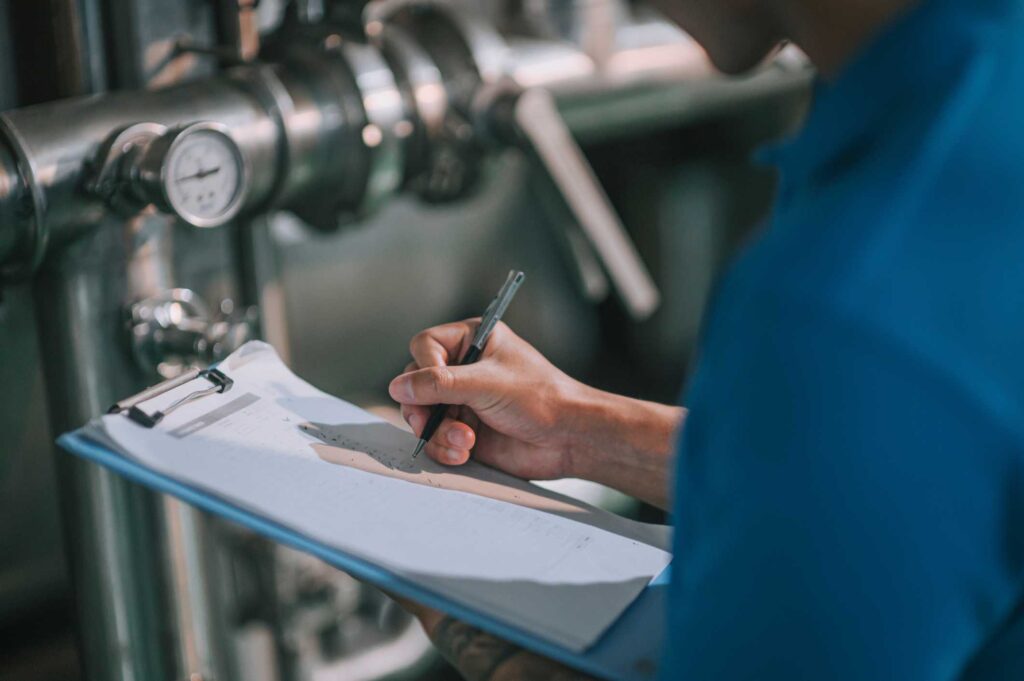
Required Inspections, Testing & Evaluations
Any facility with aboveground bulk storage containers of 1,320 gallons or more must conduct external visual inspections, integrity testing, and additional evaluations on a regular schedule and after material repairs. The US Environmental Protection Agency (EPA) created these rules to detect oil tank leaks, spills, or structural problems before oil discharges into navigable waters.
External Visual Inspections
Many facilities perform brief visual checks monthly or quarterly. Formal external inspections are usually conducted every three to five years and involve a detailed checklist and documentation process.
Oil tank inspections focus on identifying signs of wear, corrosion, or damage that could compromise a tank’s structural integrity. Inspectors check tank walls, weld seams, and coatings for cracks, bulging, or rust. They also evaluate the tank’s foundation and supports for settlement, uneven loading, or moisture intrusion.
Non-Destructive Testing
Testing is commonly performed every 10 years for field-erected steel tanks—sooner if corrosion, leaks, or coating failure are detected during visual inspections. Various integrity tests may be used to verify the conditions inside an oil tank without requiring major disassembly. Techniques include:
- Hydrostatic testing
- Radiographic testing
- Ultrasonic thickness testing
- Acoustic emissions testing
- Magnetic flux leakage testing
- Other systems of non-destructive testing
Additional Evaluations
When inspection or testing reveals potential concerns, additional evaluations may be required. Engineers review corrosion rates, settlement data, repair history, and results from prior integrity tests to establish whether repairs, reconstruction, or replacement are necessary. These evaluations ensure that each container remains reliable, secure, and capable of storing oil without risk to the environment.
Other Oil Tank Maintenance
Proper oil tank maintenance complements inspections, testing, and evaluations. The intent is to keep tanks structurally sound and safe to operate for the foreseeable future. Required practices include:
- Scheduled cleaning: Removing sludge and residue helps inspectors accurately assess internal surfaces and prevents buildup that accelerates corrosion.
- Protective coating repair: Recoating damaged areas preserves tank integrity and prevents exposure to moisture or chemicals.
- Cathodic protection checks: Regular testing ensures that corrosion control systems function as designed and effectively protect metal surfaces.
How Long Are Oil Tanks Good For?
There is no fixed lifespan for an oil tank. Its service life depends on construction materials, protective systems, and maintenance practices. Regular inspections, cleaning, and protective coating upkeep can easily extend service life to three decades or more.
Reliable Tank Services in Fayetteville and Raleigh, NC
EnviroBEE performs oil tank inspections, cleaning, and maintenance for industrial facilities across North Carolina with an emphasis on safety, efficiency, and compliance. We clean tanks of all sizes and types using environmentally responsible methods that meet all regulatory standards. To schedule oil tank inspection and maintenance services in Fayetteville or Raleigh, please contact us today.