What Is Environmental Contamination?
Understanding Environmental Contamination
Environmental contamination affects how communities live, work, and plan for the future. Industrial leaders and local agencies share a responsibility to comply with regulations and protect public health. Learn about pollution and contamination, common environmental contaminants we face today, and visible signs and health risks to watch out for.
What Is Contamination?
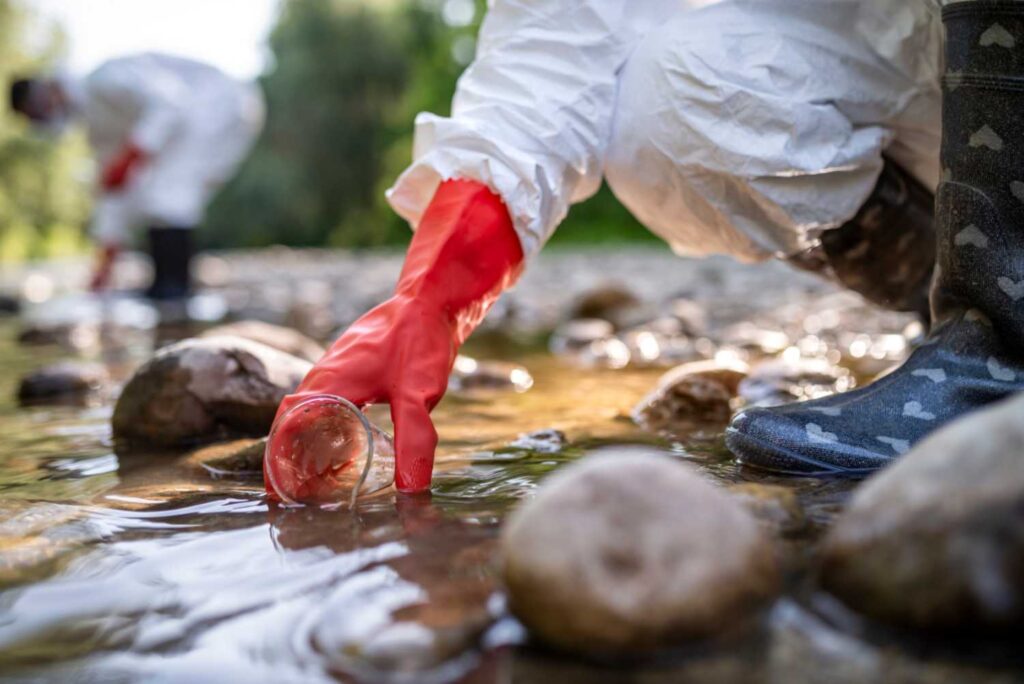
Environmental contamination is the pollution of air, water, soil, or built environments through the introduction of hazardous or unwanted substances. These substances are present where they should not be or rise to levels that threaten people, property, or ecosystems.
Environmental contaminants can be chemical, biological, physical, or radiological. Routes of exposure include air emissions, surface runoff, spills, leaks, and improper storage or handling of waste. Understanding how environmental contamination occurs helps teams prevent, minimize, and clean up pollution.
Examples of Environmental Contaminants
Consider some of the most common environmental contaminants in the world today:
- Heavy metals (lead, mercury, arsenic, and hexavalent chromium) accumulate in the soil, groundwater, and food supply.
- Volatile organic compounds (benzene, TCE, and toluene) readily vaporize and pose risks to groundwater and indoor air quality.
- Petroleum hydrocarbons (gasoline, diesel, and oils) create long-term contamination that can spread through vapor intrusion or runoff to nearby bodies of water.
- PFAS (nicknamed “forever chemicals”) have strong carbon-fluorine bonds that make them highly resistant to natural breakdown.
- Legacy building materials (asbestos, lead paint, and silica) create inhalation hazards during construction and demolition.
- Biological agents (bacteria, viruses, and molds) thrive in moist, nutrient-rich environments, leading to contamination of water systems, indoor air, and surfaces.
- Microplastics (tiny plastic particles) accumulate throughout the environment and in living organisms, including humans.
- Excess nutrients (nitrogen and phosphorus) drive algal blooms and degrade waterways.
Common Sources of Environmental Contamination
Most incidents can be traced back to predictable activities:
- Routine industrial operations often generate air emissions, wastewater, or sludge that require treatment and monitoring.
- Aboveground and underground tanks, drums, totes, and piping can leak during transfer or due to corrosion.
- Transport accidents, equipment failures, or weather events may cause spills and emergency releases.
- Incorrect waste segregation, labeling, or disposal can contaminate soil and water.
- Uncovered materials or debris in outdoor storage areas may run into storm drains during rainfall and carry pollutants to nearby waterways.
- Construction and demolition activities may release asbestos, lead paint, and silica dust into the air.
- Poor agriculture and landscaping practices allow pesticides, herbicides, and fertilizers to migrate to surface water or groundwater.
Signs of Environmental Contamination
Watch for the following visible signs and health risks:
- Oily sheens on water, stained soil, or discolored surfaces suggest chemical or fuel residues.
- Strong smells of petroleum, solvents, or rotten eggs indicate volatile emissions or gas leaks.
- Dead or discolored plants signal contaminated soil or runoff.
- Headaches, nausea, dizziness, or respiratory irritation may occur after short-term exposure to pollutants.
- Rashes, burns, or itching may result from direct contact with contaminated water or materials.
- Neurological disorders, cancer, or reproductive harm may arise from sustained exposure to environmental contaminants.
Reduce Your Organization’s Environmental Impact
EnviroBEE helps industrial companies and municipalities detect environmental issues early, manage hazardous waste safely, and respond quickly when contamination occurs. We hold numerous certifications to handle industrial waste cleanup, transportation, and disposal. Contact us today to schedule an assessment in Fayetteville or Raleigh, NC.